
Welcome to the Mathematical World!
Kiyoshi Itō
Pioneer of Stochastic Calculus
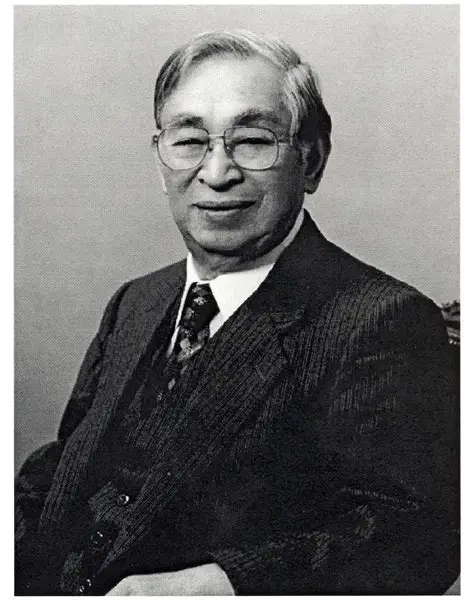
Kiyoshi Itō (1915–2008) was a brilliant Japanese mathematician who transformed the landscape of probability theory and stochastic processes. Born in Hokusei, Mie Prefecture, Itō lived through a turbulent century, including World War II, yet produced groundbreaking work that fundamentally changed both pure and applied mathematics.
Early Life and Education
Itō began his academic journey at the University of Tokyo, studying under the influential mathematician Teiji Takagi. Although his early interests lay in algebra and number theory, his focus soon shifted to probability theory — then a relatively new and evolving field. Working during wartime Japan with minimal international contact, he quietly developed ideas that would later reshape mathematics.
Development of Itō Calculus
The central theme of Itō’s work was the modeling of random, continuous processes, such as the motion of particles suspended in fluid (Brownian motion). Traditional calculus could not fully describe these systems due to their inherent randomness. In response, Itō created a new framework — stochastic calculus — which introduced powerful tools such as:
- The Itō integral
- Itō’s lemma
- Methods for solving stochastic differential equations
These tools allowed randomness to be incorporated directly into differential equations, providing a rigorous mathematical framework for uncertainty.
Applications and Global Impact
Initially, Itō’s work was slow to gain recognition, especially outside Japan. However, in the 1960s and 1970s, stochastic calculus found wide-ranging applications:
- Finance: Underpinned the Black–Scholes model for options pricing and risk management
- Physics: Described diffusion processes and quantum systems with uncertainty
- Biology: Modeled population dynamics, genetic drift, and neural activity under random influences
The versatility and depth of Itō’s ideas made stochastic calculus a universal language for modeling uncertainty in many scientific disciplines.
Academic Career and Recognition
Itō spent much of his career at Kyoto University, where he taught, mentored, and inspired a new generation of Japanese mathematicians. Despite his global acclaim, he remained modest and soft-spoken. His achievements earned him numerous honors, including:
- Imperial Prize of the Japan Academy
- Wolf Prize in Mathematics
Legacy
Kiyoshi Itō’s work continues to shape modern mathematics and its applications in finance, physics, biology, and beyond. His creation of stochastic calculus provided the mathematical world with a precise and powerful toolset for addressing the challenges of randomness and uncertainty, ensuring his place as one of the great mathematical innovators of the 20th century.

All rights reserved by the Mathematical Unity
Contact: +8801400044645
Email: mathematicalhorse1453@gmail.com
Our Discord Server: Mathematical Unity [Ulus Riyadiyat]